

Technology
2 minutes
Electric Vehicle Battery Evolution Since 2010
Battery costs dropped 90% while range tripled in 15 years
View Infographic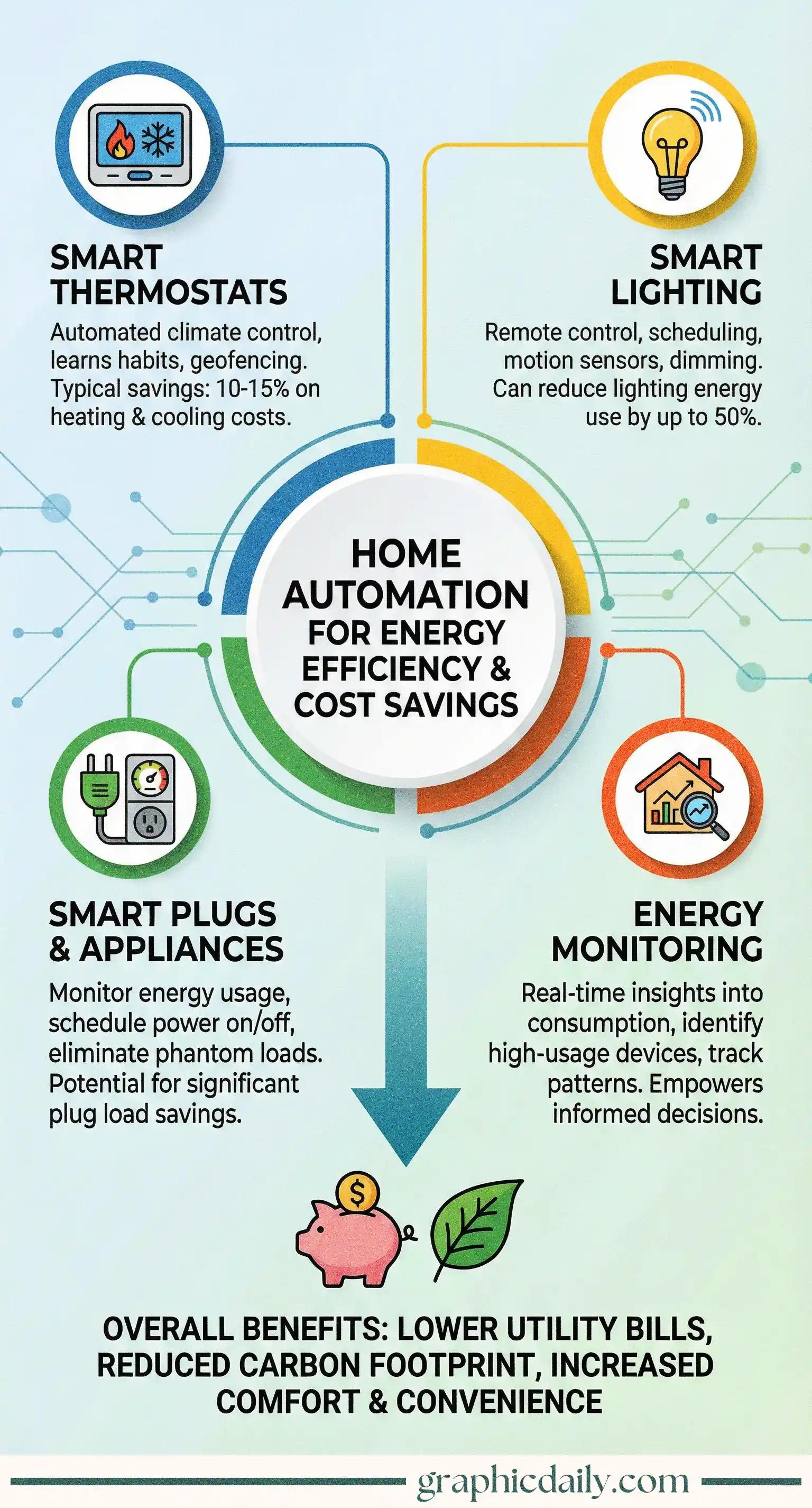
Ever glance at your electricity bill and feel that familiar pang of regret? Yeah, me too. But here's the thing—home automation isn't just some futuristic fantasy anymore. It's tangible. Accessible. And honestly, it's pretty remarkable how these smart devices can shrink your energy footprint while padding your wallet.
The infographic above breaks down the essentials beautifully, but let me add some context from what I've researched. Smart thermostats, for instance, learn your patterns—when you're home, when you're asleep, when you've inevitably forgotten to adjust the temperature before leaving for work. According to the U.S. Department of Energy, you can save roughly 10% annually on heating and cooling just by turning your thermostat back 7-10 degrees for 8 hours a day. These devices automate that process entirely, which feels almost liberating when you think about it.
Lights that extinguish themselves? Motion sensors that detect empty rooms? It's not rocket science, yet the cumulative impact is substantial. Real-time monitoring gives you visibility into which appliances are energy vampires, quietly draining power even when "off."
I won't sugarcoat it—upfront costs exist. But the long-term payoff? Genuinely compelling. Smart homes optimize without you lifting a finger, creating efficiency that compounds monthly. Plus, there's something deeply satisfying about knowing you're consuming less, wasting less, contributing less to the problem.
Small changes, automated brilliantly. That's the promise.
Sources:
Battery costs dropped 90% while range tripled in 15 years
View Infographic
Smart strategies to tame your digital chaos with cloud storage
View Infographic