

Technology
2 minutes
Home Automation for Energy Efficiency and Cost Savings
Smart home tech slashing energy bills one automated device at a time
View Infographic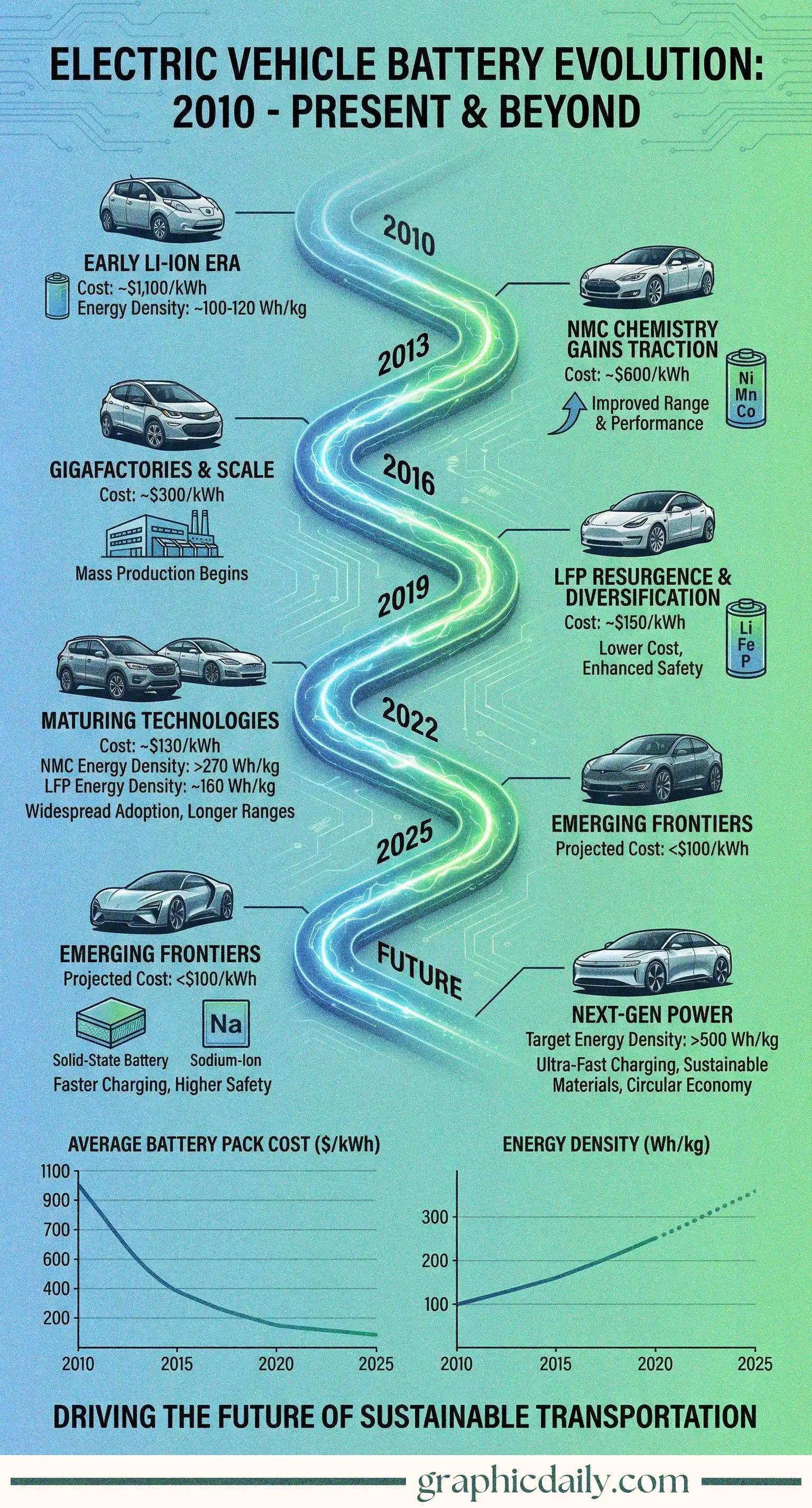
Look, I'll admit it—I wasn't exactly tracking battery chemistry back in 2010. But diving into this research for GraphicDaily's infographic above? The transformation is genuinely mind-blowing. 🔋
Picture this: a decade and a half ago, EV batteries cost an absolutely staggering $1,100+ per kilowatt-hour, according to historical data from BloombergNEF. That's insane when you think about it. No wonder electric cars felt like toys for the wealthy! Fast forward to 2025, and we're hovering around $130 per kWh—that's a 90% plunge that's basically rewritten the automotive playbook.
The economics finally make sense now.
Remember when EVs could barely limp 90-120 miles before gasping for electrons? Those days are mercifully behind us, and honestly, the contrast shown in our infographic is striking. Modern electric vehicles casually cruise 250-400+ miles on a single charge, with some ambitious models promising over 600 miles. That's not just improvement—that's obliteration of range anxiety.
I found myself wondering: what changed? Higher energy density batteries coupled with smarter vehicle engineering, mostly. The U.S. Department of Energy tracks these metrics religiously, and their data confirms the trajectory is only pointing upward.
Here's where it gets fascinating. We've moved from basic lithium-ion to exotic-sounding formulations like NMC 811 (higher nickel content for better density), then pivoted to cost-effective LFP batteries. Cell-to-pack designs eliminated unnecessary components. And solid-state batteries? They're lurking on the horizon, promising another revolutionary leap in performance and safety.
The evolution isn't slowing down—it's accelerating.
Sources:
Smart home tech slashing energy bills one automated device at a time
View Infographic
Smart strategies to tame your digital chaos with cloud storage
View Infographic