

Sustainability
2 minutes
Ways to Save Water at Home Without Compromising Comfort
Smart strategies for reducing water consumption without sacrificing lifestyle
View Infographic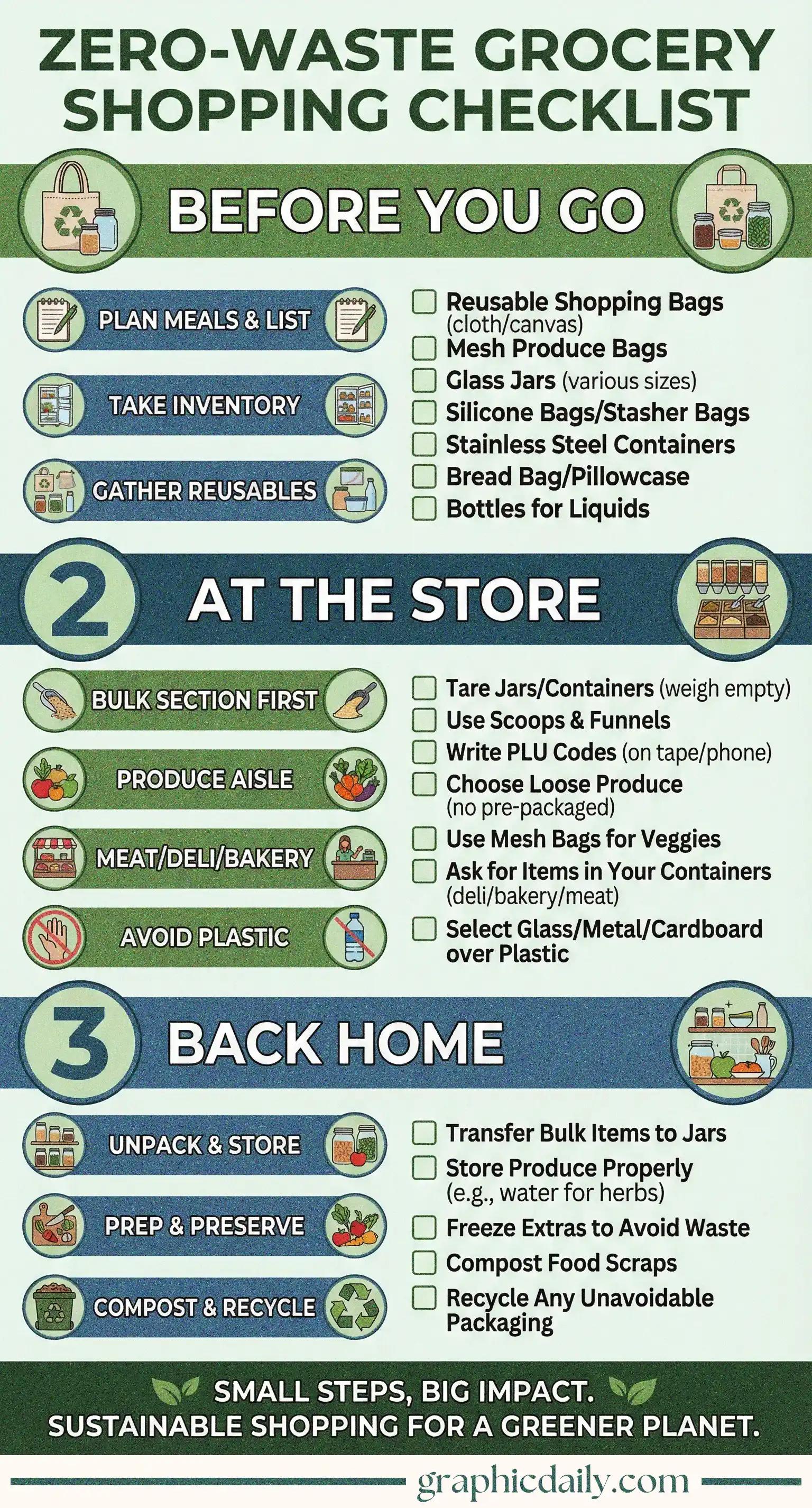
The infographic above breaks down zero-waste grocery shopping into three digestible phases, and honestly, I've been researching this topic because my own recycling bin was getting embarrassingly full every week. Turns out, the secret isn't just about what you buy—it's about completely rethinking how you shop.
Preparation is genuinely pivotal here. You need a solid meal plan and a carefully crafted shopping list, because wandering aimlessly through aisles inevitably leads to impulse purchases wrapped in mountains of plastic. I learned from the EPA's Food Recovery Challenge that meal planning dramatically reduces household food waste, which is a major environmental problem in itself. Gather your reusables too—mesh produce bags, glass jars, cloth bread bags, and those trusty canvas totes we all swear we'll remember but somehow forget in the car.
The bulk section becomes your new best friend 🌾. Here's where those glass jars really shine: have store staff tare (weigh) your empty containers first, then fill them with grains, nuts, spices, or whatever you need. According to research from Zero Waste International Alliance, bulk buying can reduce packaging waste by up to 95% compared to conventional shopping. Wild, right?
Don't hesitate asking deli or bakery staff to place items directly into your containers—most genuinely appreciate customers making sustainable choices, and I've found they're usually quite accommodating once you explain what you're doing.
Transfer everything into proper storage containers when you get home. Prep your produce immediately so it doesn't languish in the fridge until it becomes science experiments. Compost those scraps, and for anything unavoidable, recycle responsibly.
Remember, perfection isn't the goal. Progress is.
Smart strategies for reducing water consumption without sacrificing lifestyle
View Infographic
A step-by-step guide to transforming your cleaning routine sustainably
View Infographic