

Sustainability
2 minutes
Zero-Waste Grocery Shopping Checklist
A practical guide to reducing packaging waste on your grocery runs
View Infographic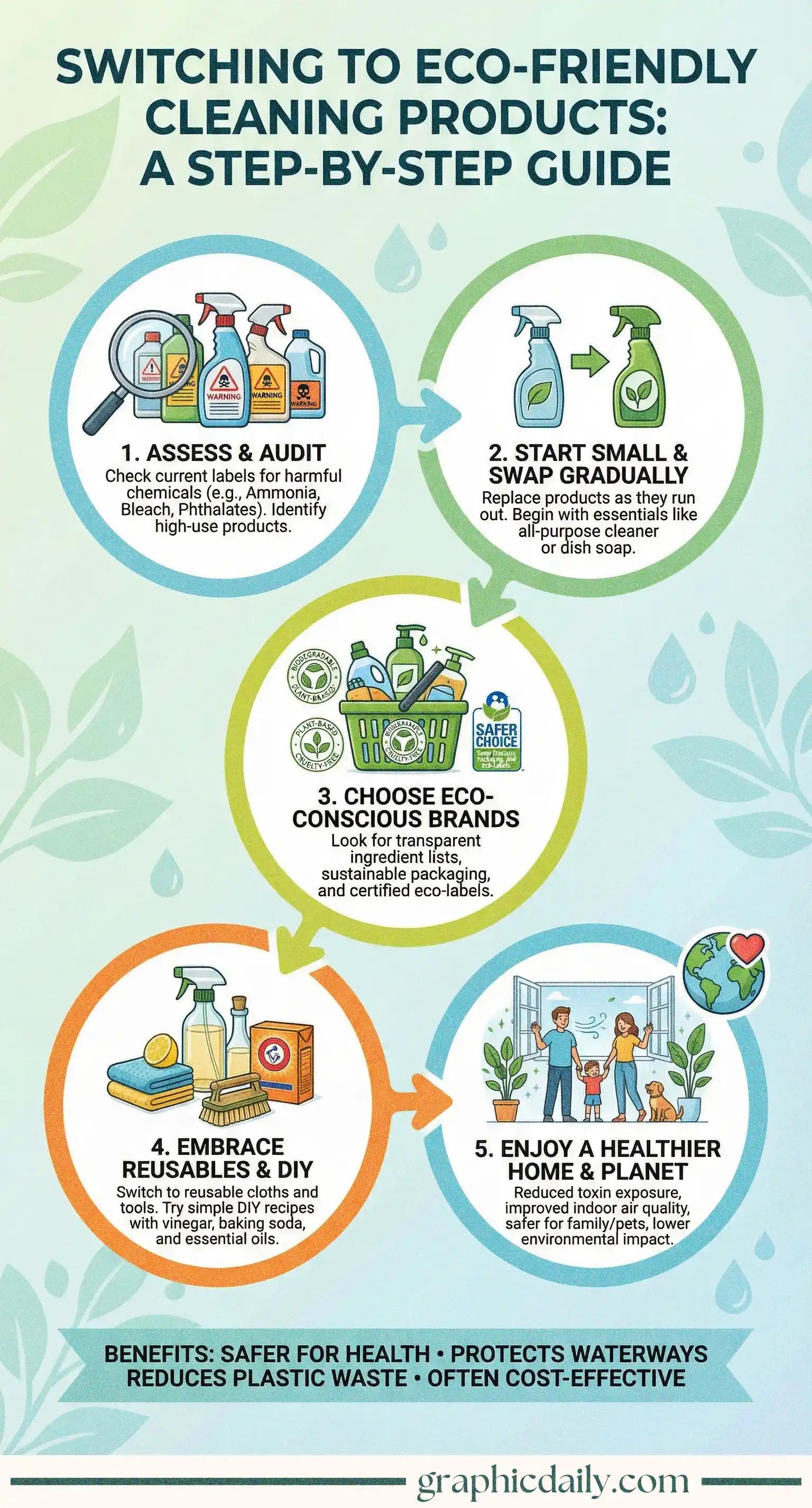
Ever peered into your cleaning cabinet and wondered what exactly you're spraying around your home? I did some digging recently, and honestly, the results were a bit unsettling.
The infographic above breaks down a manageable five-step approach to greening your cleaning arsenal, and I'm genuinely excited about how uncomplicated it actually is. Start by examining what's already lurking under your sink—those conventional cleaners often harbor ammonia, bleach, and phthalates that irritate your lungs and wreak havoc on aquatic ecosystems once they swirl down the drain. Pretty sobering stuff.
Here's where it gets refreshingly practical: you don't need to toss everything immediately! Simply wait until your current all-purpose cleaner runs dry, then swap in a plant-based alternative. This approach respects both your budget and the planet by avoiding needless waste, and according to the EPA's Safer Choice program, plenty of effective eco-options exist with transparent ingredient lists.
When shopping, hunt for certifications and buzzwords like "biodegradable" or "cruelty-free." Better yet? Mix up DIY concoctions using vinegar, baking soda, and lemon—pantry heroes that actually work. Pair these with reusable microfiber cloths instead of disposable paper towels, and suddenly you're cultivating a healthier home while protecting waterways. 🌿
The payoff? Cleaner air indoors, fewer toxins circulating, and that quiet satisfaction of knowing your scrubbing habits matter.
Sources:
A practical guide to reducing packaging waste on your grocery runs
View Infographic
Smart strategies for reducing water consumption without sacrificing lifestyle
View Infographic