

Gardening
2 minutes
Succulent Propagation from Leaves Made Easy
Step-by-step visual guide to propagating succulents from leaves
View Infographic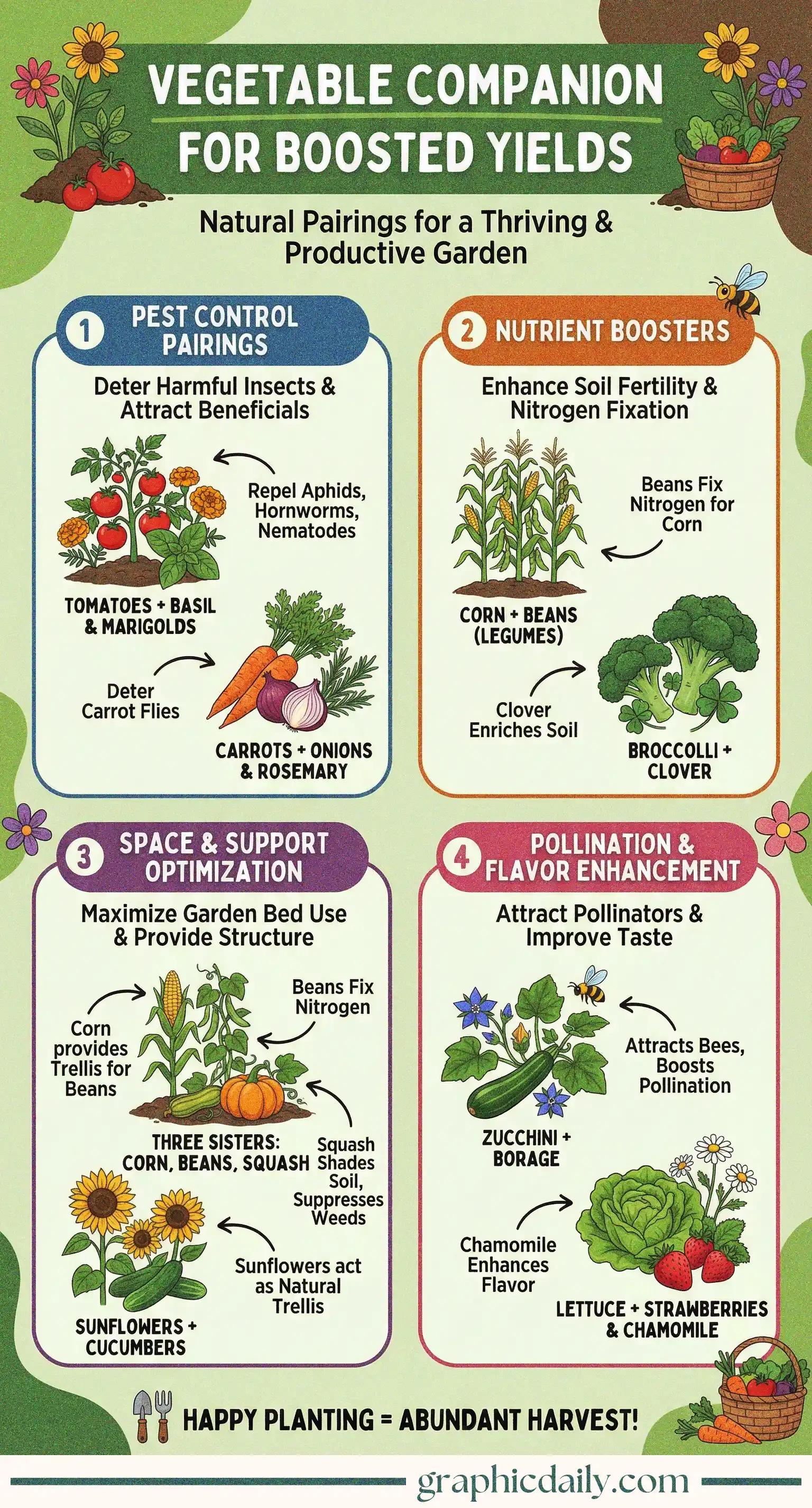
Ever wondered why some gardens seem to practically buzz with life while others just... exist? The secret might lie in who's planted next to whom. Our infographic above breaks down the fascinating world of companion planting, and honestly, I wish I'd discovered this years ago when my tomatoes were struggling.
Here's the thing about vegetables: they're surprisingly social creatures. When you pair them strategically, something almost magical happens—stronger pest resistance, richer soil, better yields overall. I spent some time digging through research from the Old Farmer's Almanac and University extension programs, and the science actually backs up what gardeners have known for centuries.
Take the classic "Three Sisters" trio of corn, beans, and squash. Brilliant, really. The corn shoots up tall, providing natural scaffolding for climbing beans, while those beans work overtime fixing nitrogen into the soil—feeding everyone around them. Meanwhile, squash sprawls below like a living mulch, keeping weeds at bay and moisture locked in.
But there's more! Marigolds near your tomatoes? They're basically bodyguards, repelling aphids with their pungent aroma. Basil planted alongside peppers might enhance their flavor (though admittedly, that claim remains somewhat anecdotal). The combinations feel endless once you start exploring.
Quick reference for beginners:
Could companion planting revolutionize your harvest? Check out our visual guide above and experiment this season.
Sources:
Step-by-step visual guide to propagating succulents from leaves
View Infographic
Transform your balcony into a thriving garden space
View Infographic