

Gardening
2 minutes
Succulent Propagation from Leaves Made Easy
Step-by-step visual guide to propagating succulents from leaves
View Infographic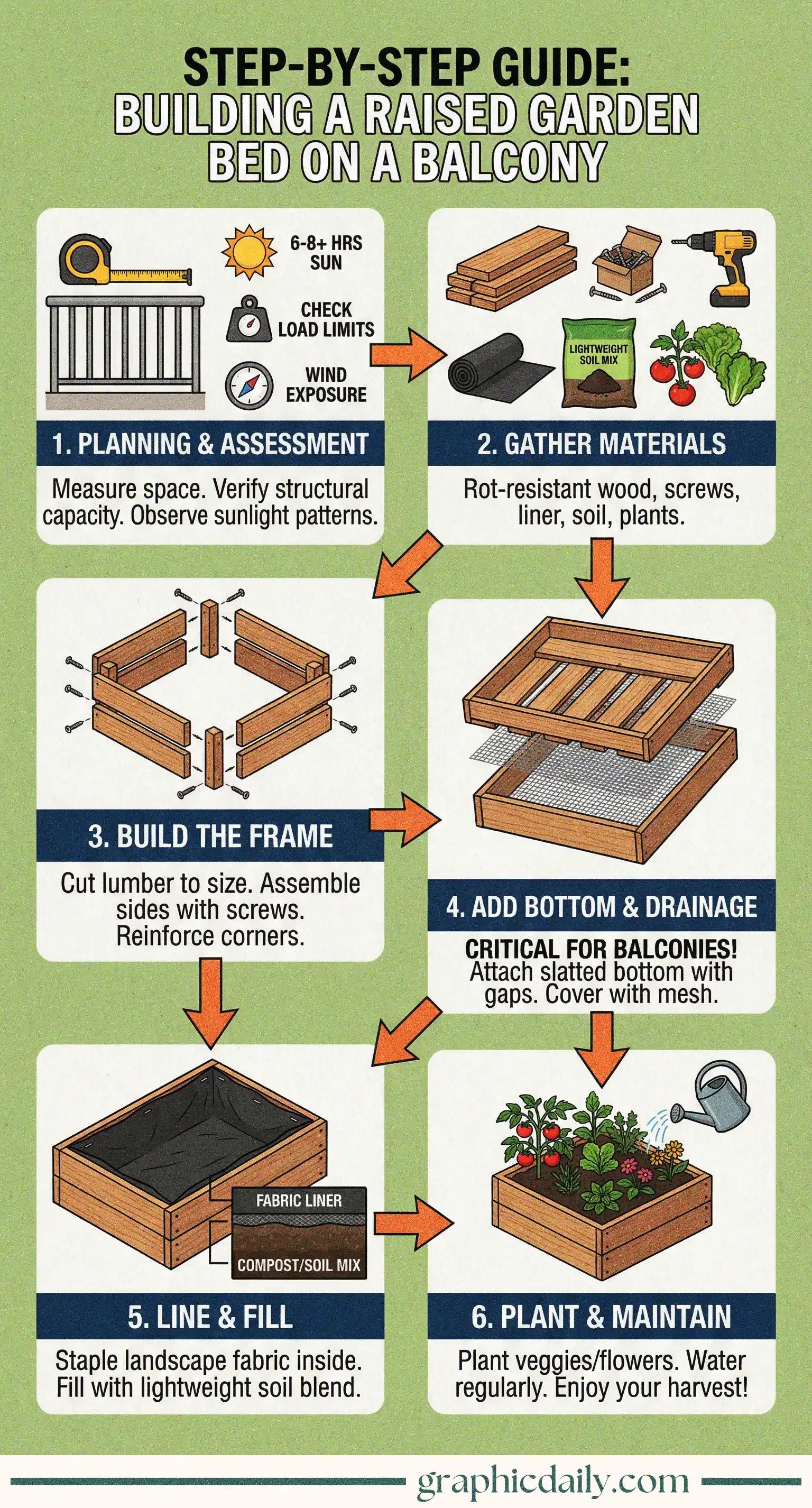
Look, I'll be honest—when I first stumbled across this idea, I didn't realize how crucial weight calculations actually are for balcony gardens. The infographic above breaks down everything you need to know about building a raised garden bed without, you know, compromising your balcony's structural integrity. 🌱
Wet soil is deceptively heavy, friends. According to resources from The Old Farmer's Almanac, container gardening requires careful planning because saturated soil can weigh significantly more than you'd anticipate. Before you even think about lumber dimensions, consult your building management or (if you're feeling extra cautious) a structural engineer to determine maximum load capacity—this single step could save you from a genuinely catastrophic situation.
Here's where things get interesting. You'll want rot-resistant lumber like cedar or redwood, but if you're growing edibles, untreated wood is non-negotiable. I researched this extensively, and the consensus from gardening communities is clear: chemicals leaching into your tomatoes? No thanks. The infographic illustrates how adding a slatted bottom with small drainage gaps (roughly 1/4 to 1/2 inch) prevents water accumulation while keeping soil contained—something ground-level beds never need to worry about.
One pivotal detail: skip garden soil entirely. It compacts like crazy in containers. Opt for lightweight potting mix instead, which Gardener's Supply Company recommends specifically for raised bed applications. Now comes the rewarding part—planting your seeds, watching them flourish, and harvesting vegetables you grew thirty feet above street level!
Sources:
Step-by-step visual guide to propagating succulents from leaves
View Infographic
Transform your yard with water-wise landscaping that's beautiful and resilient
View Infographic