

Gardening
2 minutes
Succulent Propagation from Leaves Made Easy
Step-by-step visual guide to propagating succulents from leaves
View Infographic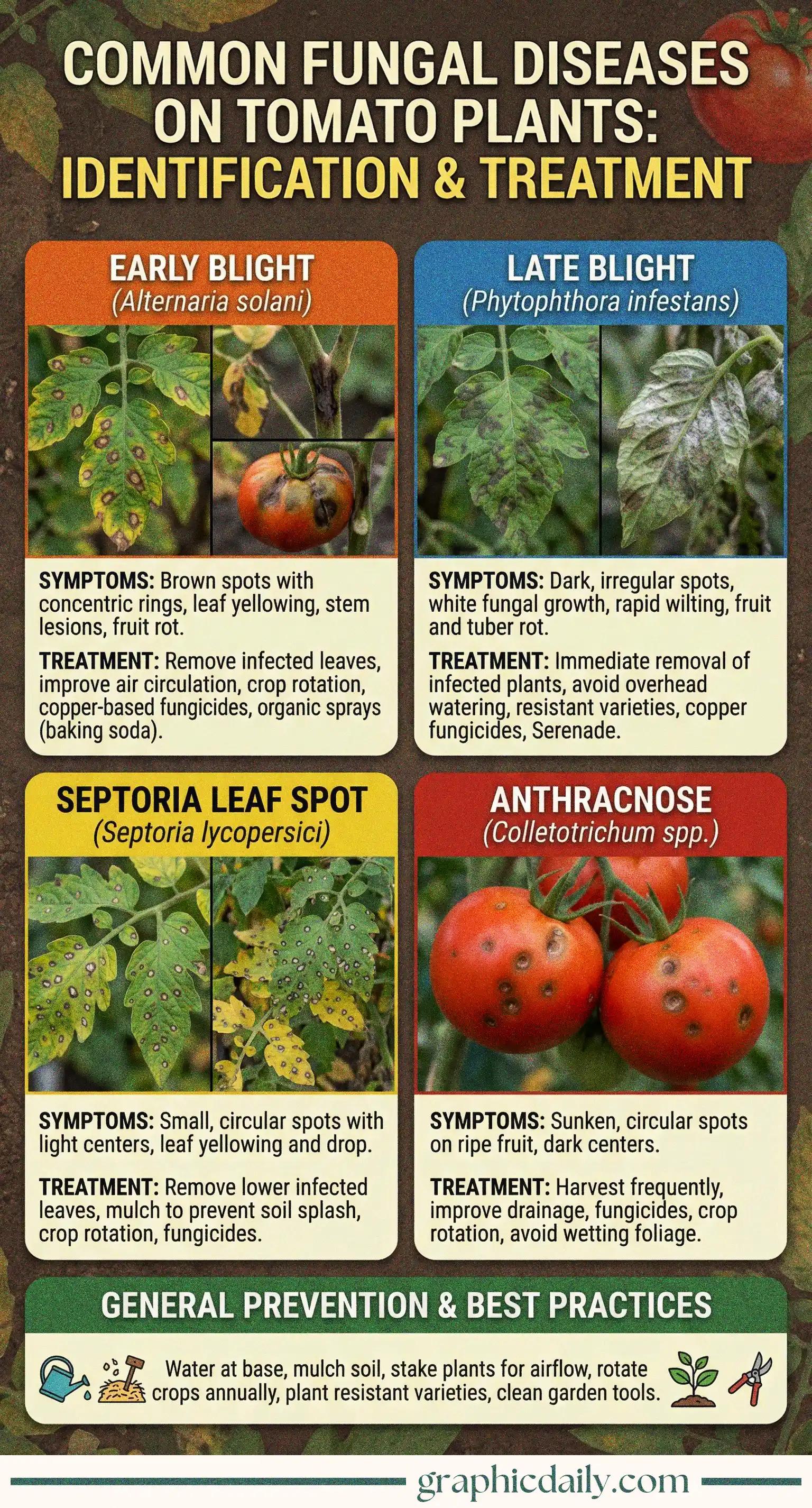
Ever noticed weird spots on your tomato leaves and panicked? You're not alone. After diving into some research on fungal diseases (because my own tomatoes looked questionable last summer), I've learned these issues are surprisingly common but totally manageable.
Our infographic above breaks down four troublemakers you'll want to recognize. Early blight shows up first with those distinctive bullseye patterns—honestly, it's almost fascinating how precise nature can be. Late blight is the real villain here, thriving when it's cool and damp, potentially decimating your entire crop in days if left unchecked. Then there's Septoria leaf spot, which won't necessarily kill your plant but will absolutely sabotage your harvest through relentless defoliation. And anthracnose? That one waits until your tomatoes are almost ready before ruining them with sunken, nasty spots. Talk about frustrating timing!
Here's the thing: prevention trumps treatment every single time. The USDA Plant Hardiness Zone Map can help you understand your growing conditions, while resources like Cornell Cooperative Extension offer fantastic guidance on tomato diseases. Keep leaves dry by watering at soil level. Mulch religiously. Space those plants out for proper airflow—cramped tomatoes are vulnerable tomatoes.
According to plant pathology experts, maintaining these cultural practices can reduce fungal infections by up to 70% compared to neglected gardens. Worth the effort? Absolutely. Your September self will thank you when you're harvesting unblemished tomatoes instead of mourning spotted, dropping leaves 🍅
Step-by-step visual guide to propagating succulents from leaves
View Infographic
Transform your balcony into a thriving garden space
View Infographic