

Home
2 minutes
Painting a Room on a Budget Step-by-Step
Transform your space without emptying your wallet using smart strategies
View Infographic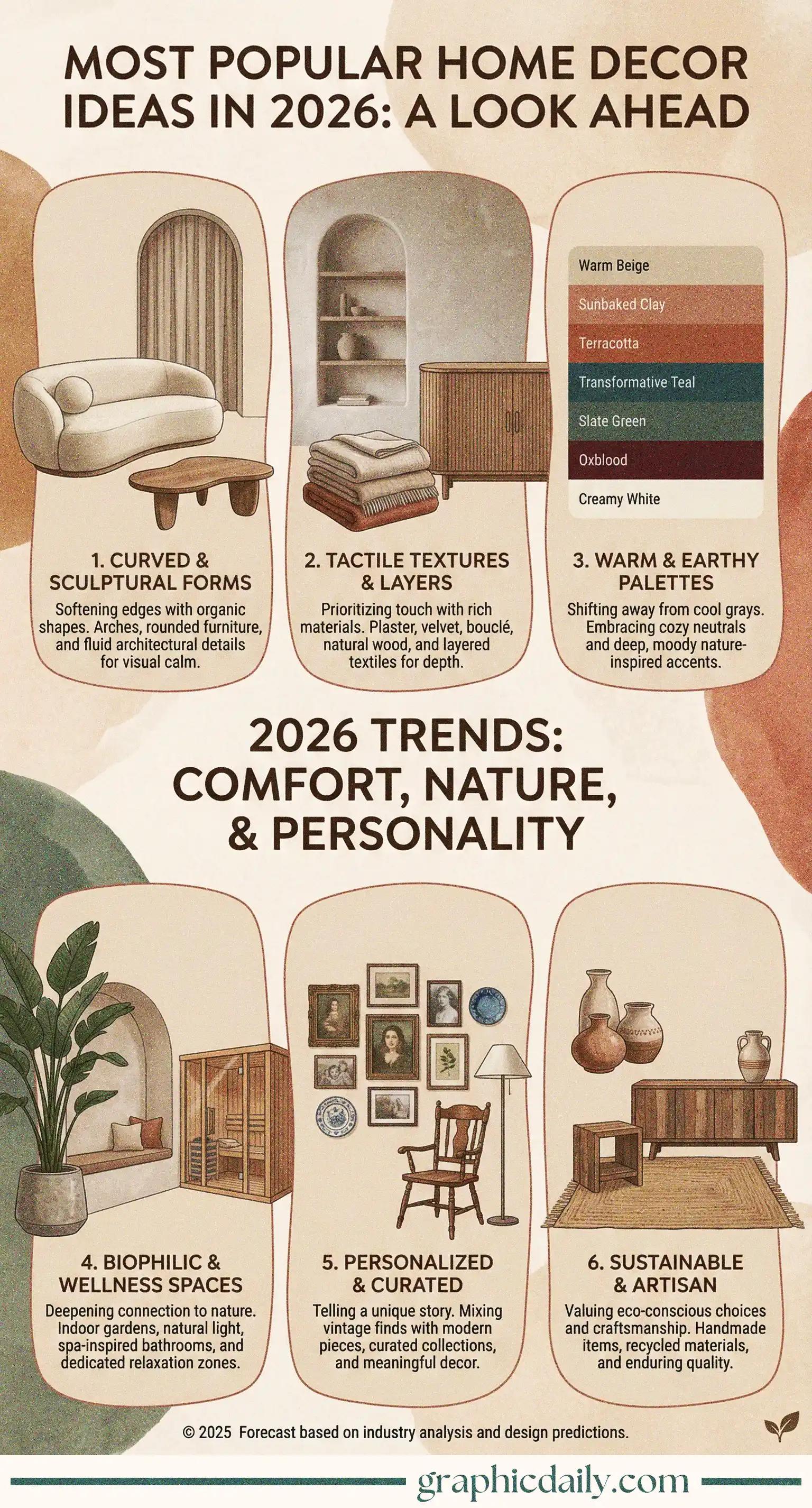
After diving into design magazines and scrolling through more Pinterest boards than I'd like to admit, I've noticed something fascinating: 2026 home decor is all about feeling over formality. The infographic above captures this shift beautifully, doesn't it?
Gone are the harsh angles and clinical whites that dominated the last decade. Instead, we're embracing curved sofas that practically beg you to sink into them, rounded coffee tables that won't bruise your shins (finally!), and those dreamy arched doorways I've been seeing everywhere. It's architectural therapy, really—spaces that flow rather than interrupt.
Here's what genuinely excites me: designers are prioritizing how rooms feel to the touch. We're layering plaster walls with fluted wood cabinetry and that irresistibly nubby bouclé fabric everyone's obsessing over. Natural textiles like wool and linen add depth that flat surfaces simply can't achieve. Your home should invite touch, not just admiration.
The most pivotal trend? Personalization merged with consciousness. Cookie-cutter aesthetics are out; curated collections that tell your story are in. I've researched this extensively through interior design forums, and the consensus is clear: people want handmade artisan pieces, reclaimed materials, and furniture built to outlast fleeting trends. According to design resources like Architectural Digest and sustainability-focused sites like Treehugger, this shift reflects our collective move away from disposable culture.
The warm, earthy palette—creamy whites, sunbaked clays, transformative teals—creates spaces that actually nurture wellbeing rather than just photograph well for social media.
Sources:
Transform your space without emptying your wallet using smart strategies
View Infographic
Transform cramped closet chaos into organized bliss with these space-saving strategies
View Infographic