

Travel
3 minutes
Solo Travel Safety Tips for Women
Essential safety strategies every solo female traveler should know
View Infographic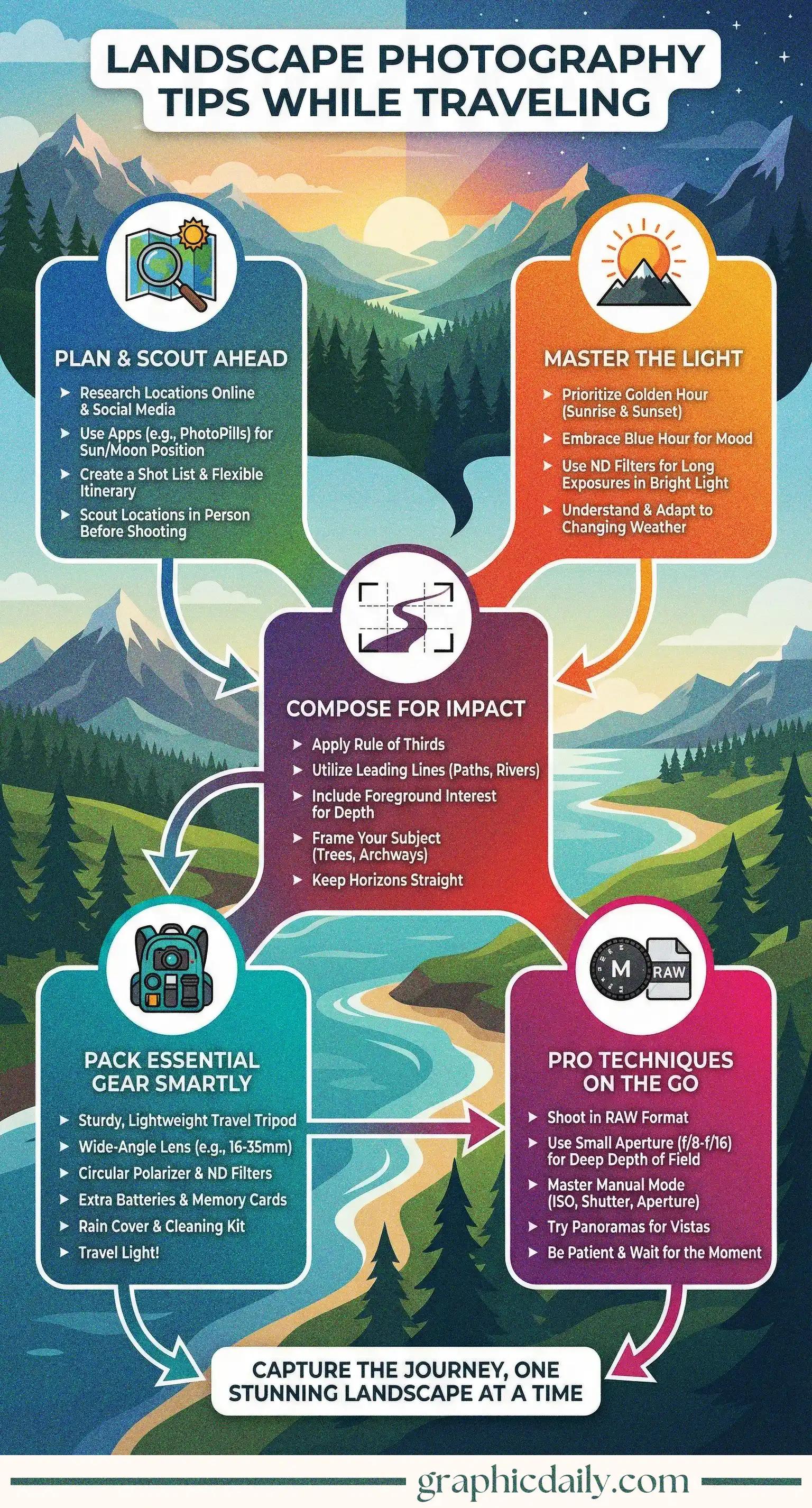
Look, I'll admit something: my first travel landscape photos were absolutely terrible. But after diving into research and testing various techniques during my trips, I've learned that capturing breathtaking scenery isn't just about pointing and shooting—it's about understanding a few pivotal principles that can transform your images from mediocre snapshots into frame-worthy memories.
The infographic above breaks down what seasoned photographers have known for decades, and honestly, it's something I wish I'd learned earlier. Golden Hour—that magical time just after sunrise and before sunset—bathes everything in warm, directional light that makes landscapes look almost otherworldly. But here's what surprised me: don't ignore bad weather! According to National Geographic's photography guides, stormy skies can add drama and emotion that sunny days simply can't match. I've found that using apps like PhotoPills helps me predict exactly when that perfect light will hit my chosen location, which feels like having a secret weapon in my camera bag.
The Rule of Thirds isn't just some arbitrary guideline—it genuinely guides your viewer's eye through the scene in a way that feels natural and compelling. Place your horizon on the upper or lower third line rather than dead center, and watch how much more dynamic your image becomes. Leading lines? They're everywhere once you start noticing them. Roads, rivers, fence posts. They pull viewers into your frame. Adding a strong foreground element creates depth that makes landscapes feel three-dimensional rather than flat, which is something I learned from experimenting with different perspectives at the same location.
Travel light but smart. A compact tripod is non-negotiable for those low-light situations, and according to photography resources from B&H Photo, a circular polarizer can dramatically enhance sky contrast and reduce glare from water surfaces. Shoot in RAW format—trust me on this one—because you'll have so much more flexibility when editing later. Small apertures (f/8 to f/16) give you that gorgeous sharpness from foreground to background that makes landscape photos really pop.
Our infographic at GraphicDaily lays out these essentials in an easy-to-digest format, perfect for referencing before your next adventure. Sometimes the best shot happens when you're patient enough to wait for it. 📸
Essential safety strategies every solo female traveler should know
View Infographic
Discover the most stunning fall foliage drives across America
View Infographic