

Business
2 minutes
Writing a Business Plan That Attracts Investors
Essential components for crafting investor-ready business plans
View Infographic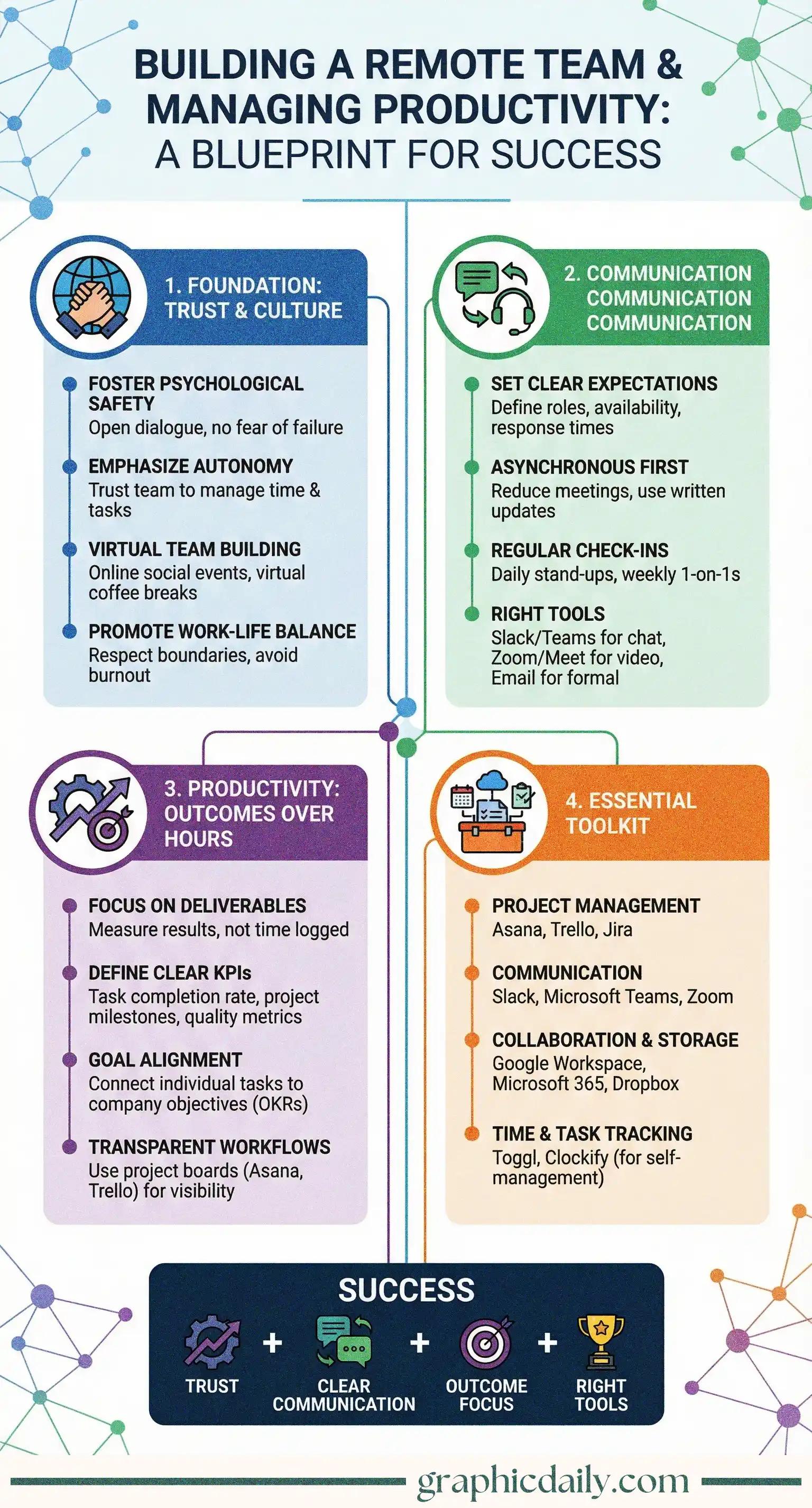
Remote work isn't going anywhere. That much is clear. But here's the thing—managing a distributed team requires a completely different playbook than traditional office management, and honestly, the infographic above breaks this down beautifully into four essential pillars that actually make sense.
You can't micromanage your way to productivity when everyone's scattered across different time zones and living rooms. Trust becomes absolutely pivotal here, and according to research I found from Buffer's State of Remote Work report, fostering psychological safety where people feel comfortable voicing concerns is the bedrock of remote success. Autonomy matters. When team members know you trust them to manage their own schedules and deliverables, they tend to rise to the occasion rather than shrink from it.
Physical office cues? Gone. That casual desk drop-by to clarify something? Non-existent. This makes deliberate communication absolutely non-negotiable for remote teams, and I've learned through diving into this topic that an "asynchronous-first" approach can drastically reduce meeting fatigue while still keeping everyone aligned on expectations and timelines.
Here's where remote work truly shines: shifting from hours logged to results delivered. Instead of watching who arrives at 9 AM sharp, focus on clear deliverables and measurable KPIs that tie back to company objectives—frameworks like OKRs work particularly well here. Tools like Asana or Jira provide that crucial transparency through project boards, letting everyone see progress in real-time without the need for constant status update meetings that drain energy and enthusiasm from creative work.
Sources:
Essential components for crafting investor-ready business plans
View Infographic
Turning jewelry-making into a profitable online venture
View Infographic