

Food
2 minutes
Quick and Nutritious Breakfast Ideas for Busy Mornings
Fuel your hectic mornings with these delicious, balanced breakfast strategies
View Infographic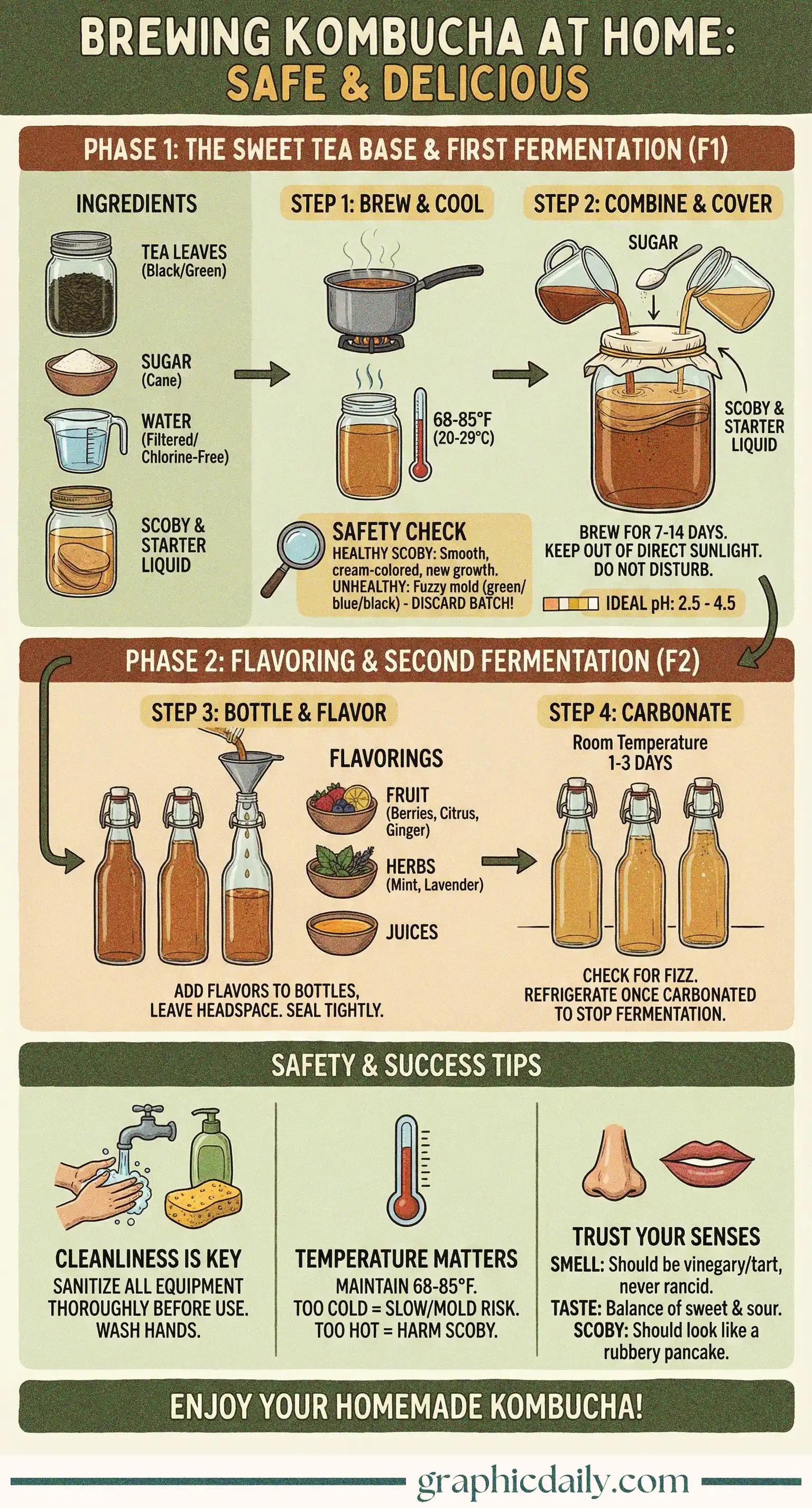
Ever stared at those $5 bottles of kombucha at the grocery store and thought, "I could probably make this myself"? Turns out, you absolutely can—and our infographic above breaks down everything you need to know about brewing this tangy, effervescent drink without turning your kitchen into a science experiment gone wrong.
Here's the thing about kombucha: it sounds way more complicated than it actually is. The star of the show is something called a SCOBY, which honestly looks like a rubbery pancake but is actually a symbiotic culture of bacteria and yeast that transforms sweet tea into that distinctive tart beverage we've all grown to love (or at least become curious about). You'll need filtered water because chlorine is basically kryptonite to your culture, some plain black or green tea, regular cane sugar for the SCOBY to munch on, and a gallon-sized glass jar—never metal or plastic, as the acidity will react with those materials in ways you definitely don't want.
The temperature bit is pivotal. Your brewing spot needs to hover between 75-85°F, which is warmer than most people keep their homes but cooler than a sauna. I learned from Kombucha Kamp that going below this range invites mold, while excessive heat murders your SCOBY. Not ideal either way! 🍵
After you've brewed your sweet tea, cooled it down (seriously, wait until it's below 85°F or you'll commit SCOBY-cide), and gently plopped in your culture with some starter liquid, the real challenge begins: patience. The first fermentation takes 7-14 days, depending on your taste preferences and ambient temperature, and that new baby SCOBY forming on the surface? That's not contamination—it's actually a sign things are going swimmingly, according to research from Colorado State University Extension.
But here's where vigilance becomes non-negotiable. Fuzzy mold spots mean game over. No salvaging, no "maybe it's fine"—just toss everything and start fresh. The American Homebrewers Association emphasizes that proper sanitation prevents most disasters, so wash those hands and sterilize your equipment like your fizzy future depends on it.
Once you've nailed the basics, the second fermentation is where creativity flourishes. Bottle your kombucha with fruit juice, fresh berries, ginger, or whatever sounds appealing, then let those sealed bottles carbonate for 1-3 days at room temperature. Just remember to burp them occasionally unless you enjoy impromptu kitchen explosions. The whole process feels a bit like nurturing a weird pet that rewards you with delicious, probiotic-rich beverages.
Sources:
Fuel your hectic mornings with these delicious, balanced breakfast strategies
View Infographic
Your guide to stress-free vegetarian meal prep that saves time
View Infographic