

Home
2 minutes
Painting a Room on a Budget Step-by-Step
Transform your space without emptying your wallet using smart strategies
View Infographic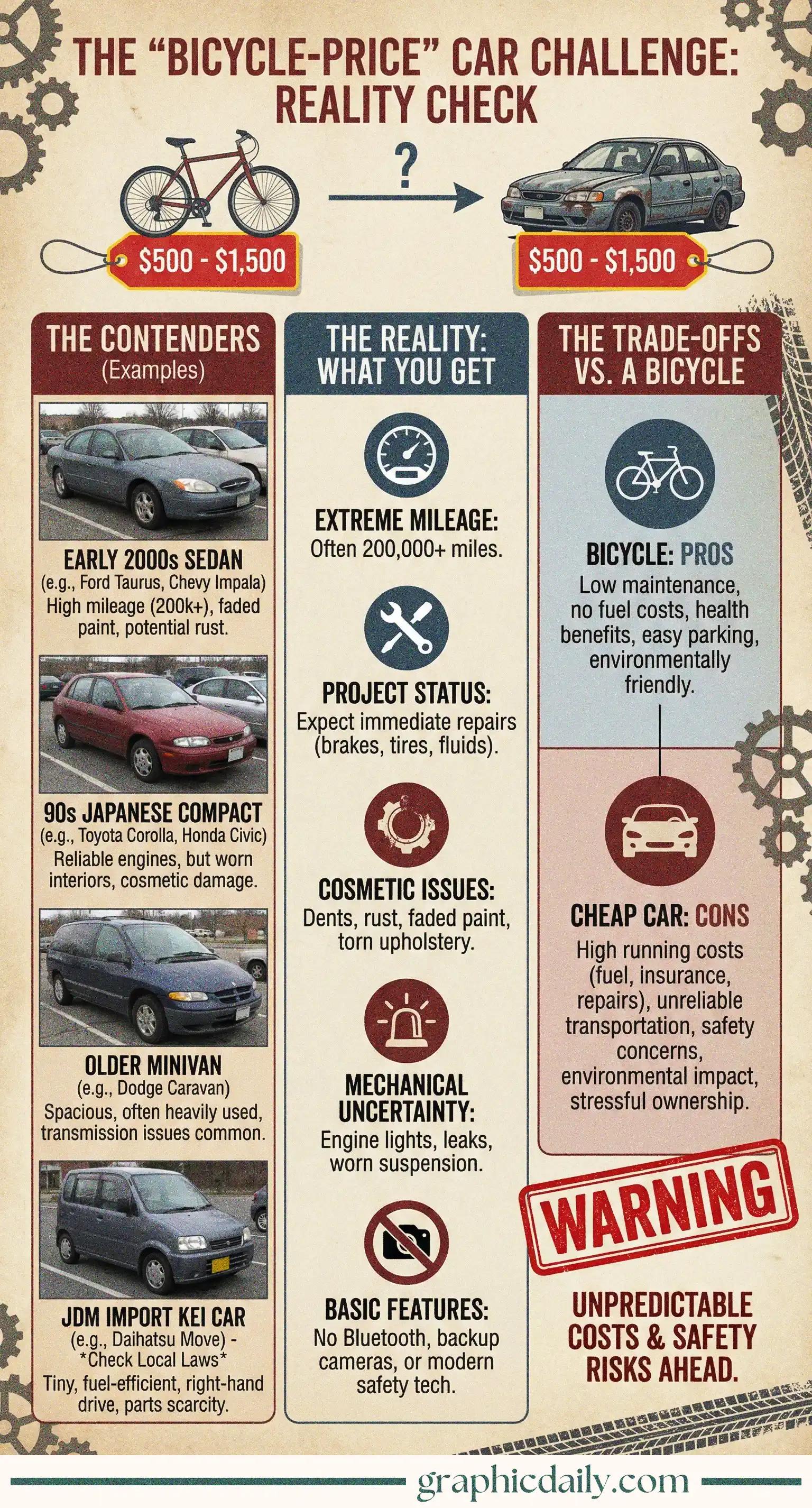
Look, I stumbled down this rabbit hole recently when a friend asked if buying a $500 car was actually feasible. Spoiler alert: it's complicated. The infographic above breaks down what you're genuinely signing up for when you venture into this peculiar corner of the automotive market, and honestly, it's both fascinating and slightly terrifying.
You've got a few archetypes here, none particularly glamorous. Early 2000s domestic sedans like the Ford Taurus or Chevy Impala dominate this space because parts are everywhere and mechanics know them inside-out, but brace yourself for odometers reading well past 200,000 miles with maintenance histories that might charitably be described as "creative." Then there are the legendary Japanese warriors—90s Honda Civics and Toyota Corollas that refuse to die despite rust, exhaustion, and questionable previous ownership. Some folks even encounter quirky Kei cars like the Daihatsu Move, those adorable Japanese micro-machines that sip fuel but good luck finding a mechanic who's even heard of them 🚗.
Here's where things get spicy. According to research from consumer advocacy sites like Edmunds and Consumer Reports, the purchase price is genuinely just your entry fee into a much more expensive game. Immediate repairs aren't optional—they're mandatory. We're talking tires, brakes, batteries, fluids. The check engine light? Consider it ambient mood lighting at this point.
| Expected Immediate Cost | Estimated Range |
|---|---|
| Tires (used/budget) | $200-400 |
| Brakes | $150-300 |
| Battery | $80-150 |
| Basic fluid changes | $100-200 |
That bicycle is sounding pretty reasonable now, right?
The comparison isn't just clever—it's pivotal. A quality bicycle at the same price point delivers reliability, health benefits, zero insurance costs, and actual peace of mind. Meanwhile, that beat-up sedan becomes a second job you didn't apply for, draining money through insurance, gas, and that delightful mechanical surprise every few weeks.
I'm genuinely not saying never buy cheap cars. But understand what you're getting into. Sometimes combining a decent bike with occasional rideshares or public transit saves not just money, but your sanity too.
Sources:
Transform your space without emptying your wallet using smart strategies
View Infographic
Transform cramped closet chaos into organized bliss with these space-saving strategies
View Infographic