

Travel
3 minutes
Solo Travel Safety Tips for Women
Essential safety strategies every solo female traveler should know
View Infographic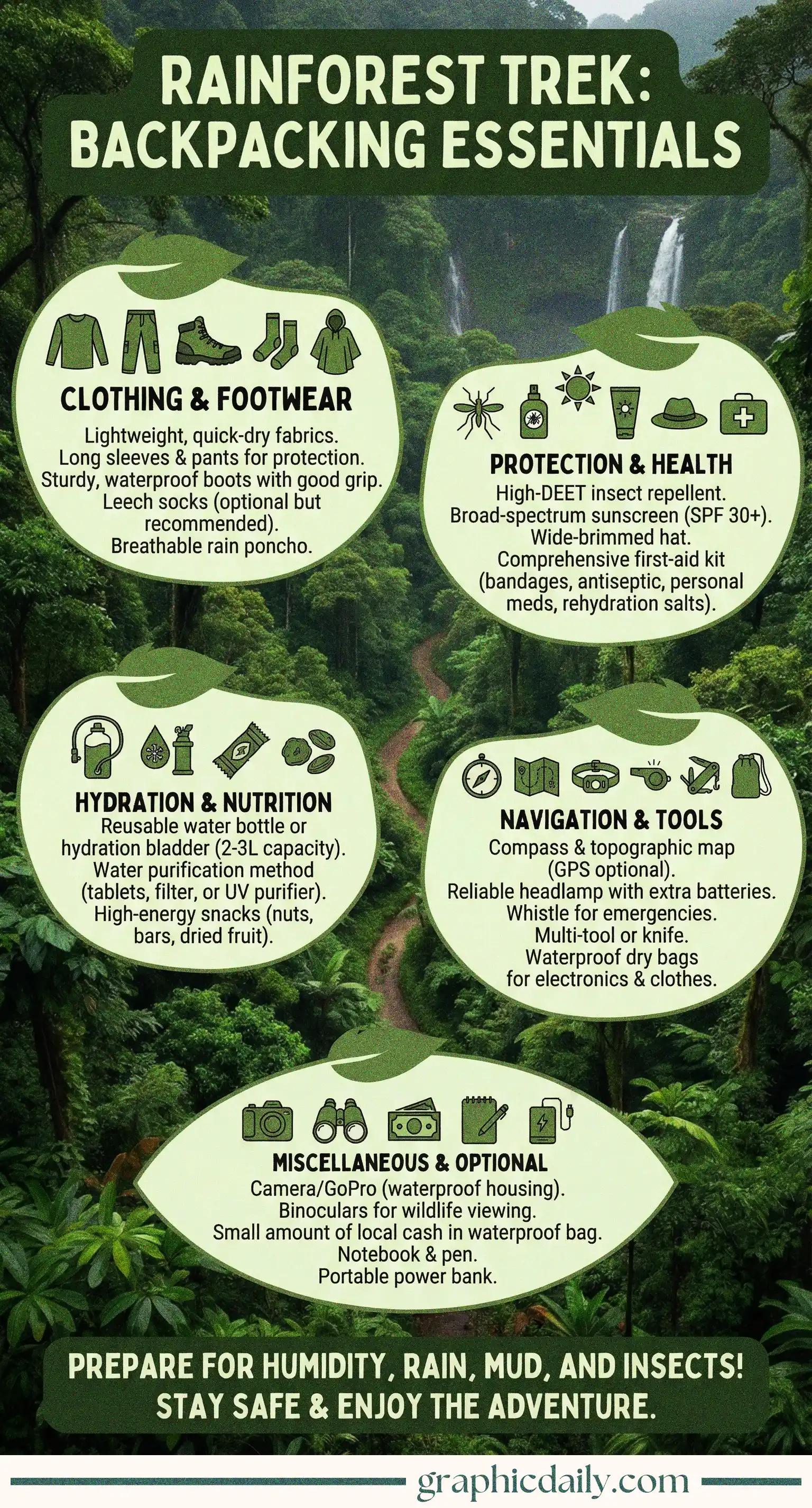
Look, I'll be honest—planning my first rainforest trek felt overwhelming. The humidity? The bugs? The leeches? But after diving into research and piecing together the essentials (because let's face it, nobody wants soggy socks for three days), I realized it's all about strategic packing.
Here's the thing about rainforest environments: they're unforgiving to cotton lovers. I learned from REI's expert guides that synthetic fabrics and merino wool become your best friends when everything around you drips with moisture, because these materials actually dry instead of clinging miserably to your skin like a wet blanket. Long sleeves aren't just recommended—they're your shield against relentless insects and those surprisingly sharp plants that seem determined to scratch every exposed inch of skin.
Waterproof boots with ankle support? Absolutely pivotal. Those muddy, root-laden trails won't show mercy to flimsy footwear, and according to hiking safety resources, ankle injuries rank among the most common backcountry mishaps.
The CDC's travel health section emphasizes high-DEET insect repellent (we're talking 30%+ concentration here) because mosquitoes in tropical regions aren't just annoying—they can carry serious diseases like malaria or dengue fever. That sobering fact changed my entire perspective on bug spray! Pack sun protection too, even beneath the canopy, and don't skip the comprehensive first-aid kit with blister treatment, antiseptic wipes, and rehydration salts.
Water purification tablets or filters become non-negotiable when you're miles from civilization, transforming questionable stream water into something safe to drink without gambling on intestinal distress ruining your adventure.
Our infographic above breaks down the visual essentials, but let me emphasize: dry bags are sacred. Assume everything will get drenched at some point—because it probably will—and protect your electronics, spare clothes, and sleeping gear accordingly. A headlamp with backup batteries ensures you're not stumbling around camp after the rainforest's notoriously quick nightfall.
Don't forget lightweight, calorie-dense snacks like nuts and energy bars to maintain your stamina through demanding terrain. Navigation tools (yes, actual maps and compasses, not just your phone) provide reliable backup when technology fails you in the middle of nowhere.
The beauty of rainforest trekking lies in its raw, biodiverse magnificence. Smart preparation simply ensures you'll actually enjoy it rather than just survive it. 🌿
Essential safety strategies every solo female traveler should know
View Infographic
Discover the most stunning fall foliage drives across America
View Infographic